Research Article
Issue Editorial Board



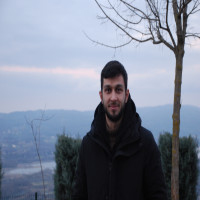
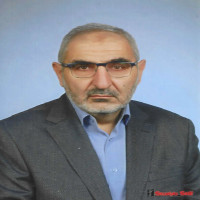

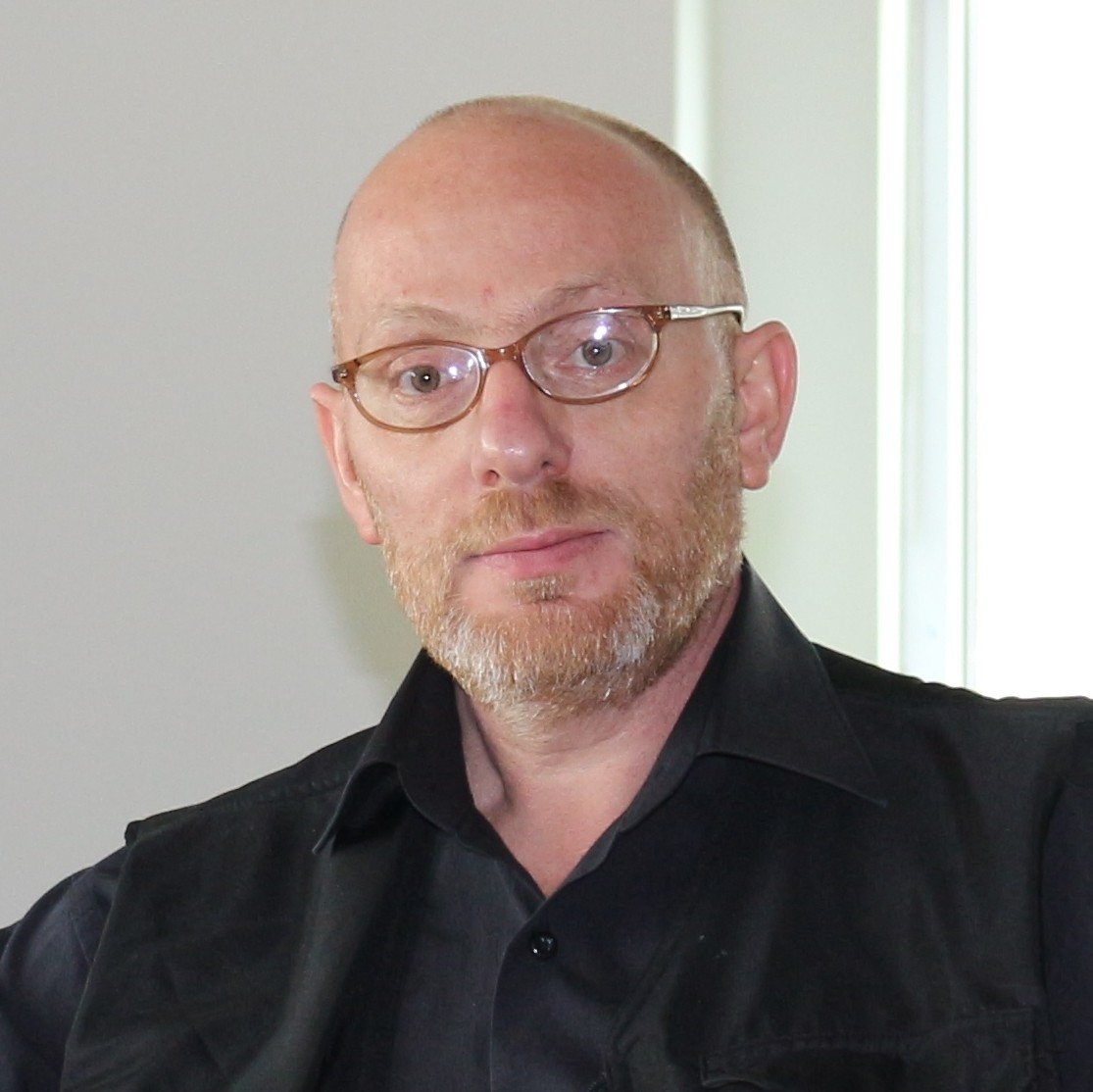
2023-: Ordu Univ. Faculty of Divinity, Department of History of Religions (Asst. Prof.)
2018-2022: Erciyes University ISS - History of Religions (Ph.D)
2016-2018: Erciyes University ISS - History of Religions (M.Sc.)
2011-2016: Erciyes University Faculty of Divinity (Grad)
Arabic B2 | English B2 | Japanese B2 | Korean A1
Aim & Scope
Ordu Divinity is an academic refereed journal published by Ordu University Faculty of Divinity in two issues in March and September. Ordu Divinity aims to contribute to science by publishing and publicizing studies such as articles, book reviews and symposium evaluations in the field of religious studies (Social Sciences and Humanities/Religion). Research articles, translations, reviews and book reviews by researchers with at least a PhD degree or postgraduate researchers are accepted for evaluation. Articles submitted for publication are subjected to double blind peer review by at least two referees. In addition, a special plagiarism detection program is used to confirm that the articles have not been published before and do not contain plagiarism. The 350-500 word abstract/abstract text of the articles whose refereeing process is completed is requested to be expanded to 750-1500 words.
Ordu Divinity publishes comparative and interdisciplinary multifaceted original studies (Islam, religion, ethics, science, anthropology, history, law, linguistics, philosophy, psychology, sociology, education, literature and art) in the fields of Social and Human Sciences / Religion.
Publication Principles
Publication Content
Ordu Divinity contains original scientific publications. All published articles, except editorials, are subjected to double blind peer review by at least two referees.
Topic Category
- Social Sciences - Religious Studies
- Humanities, Theology, Law, Linguistics, Philosophy, Psychology, Sociology, History, Religion, Education, Music, Literature, Art.
LC Category
Social Sciences (General)
Keywords
Theology, Tafsir, Hadith, Islamic Law, Sufism, Arabic Language and Rhetoric, History of Sects, Philosophy, Philosophy of Religion, Islamic Philosophy, Moral Philosophy, Turkish-Islamic Philosophy, Islamic Studies, Religious Education, Sociology of Religion, Psychology of Religion, Islamic History, Turkish-Islamic History, Turkish-Islamic Culture, Religious Music, Turkish-Islamic Music, Turkish-Islamic Literature, Islamic Arts, Turkish-Islamic Arts, Turkish-Islamic Works.
Publication Language
Full Text Publication Language:
- Primary Language: Turkish
- Secondary Language: English
Content Written in English and Latin Alphabet:
- Article Title: Turkish & English
- Author Name: Turkish (in Latin Alphabet)
- Author Address: Turkish (in Latin Alphabet)
- Keywords: Turkish & English
- Bibliography: Turkish (in Latin alphabet)
- Full Text: Turkish (in Latin Alphabet)
Article Submissions
Submitted manuscripts must be appropriate to the purpose and scope of the journal. Original, previously unpublished manuscripts, which are not under evaluation in another scientific publication, and whose content and submission have been approved by the author are accepted for evaluation.
Readership
The academic level of the published articles is suitable for academicians, researchers, graduate students and related academic institutions and organisations.
Originality of Articles
Ordu Divinity does not accept studies previously published elsewhere. However, sometimes articles published in a foreign language may be accepted. Papers presented in scientific meetings can be published provided that the necessary explanations are made.
Referee Type
The editor ensures that the manuscripts undergo a fair double blind review and, if the manuscript meets the formal requirements, submits the manuscript to the evaluation of at least two referees from Turkey and/or abroad. If the referees deem necessary, they approve the publication of the manuscript after the requested changes are made by the authors. Editors mediate all interactions between referees and authors. Time in Review: Average 60 Days / 8 Weeks
COPE's Best Practice Principles
Ordu University is committed to the highest standards in publication ethics. Ordu Divinity accepts COPE's (Committee on Publication Ethics) Principles of Transparency and Best Practice in Scientific Publications.
Plagiarism Prevention
Authors submitting articles to Ordu Divinity are deemed to have declared that they have not committed any ethical violations. The texts are analysed by Intihal.net software for plagiarism/similarity rate. The plagiarism/similarity rate determined by the Publication Board is 20%. The main measure of the similarity rate is the author's compliance with the rules of citation and citation. If the similarity rate is 1%, but citation and quotation are not done properly, plagiarism may still be in question. In this respect, citation and quotation rules should be known and carefully applied by the author.
Plagiarism, duplication, false authorship/unacceptable authorship, research/data fabrication, article slicing, sliced publication, copyright infringement and concealment of conflict of interest are considered unethical behaviours. All articles that do not comply with accepted ethical standards are removed from publication. This includes articles containing possible irregularities and non-conformities detected after publication.
Correction, Retraction, Expression of Concern
If the editors find minor errors in the published article that do not affect the findings, interpretations and conclusions, they may consider publishing a correction. Editors should consider retracting the manuscript if there are major errors/violations that invalidate the findings and conclusions.
Editors should consider issuing a statement of concern if there is a possibility of research or publication misconduct by the authors, and the authors' institutions are not investigating the incident or are drawing unfair conclusions. The COPE guidelines regarding correction, retraction or expression of concern are taken into account.
Turkey Editors Workshop Group
Ordu University supports the editors to be in contact with other editors, considering that it will be useful for the editors. Our editors are members of the Turkish Editors Workshop Group.
Storage of Referee Reports
Ordu University takes the task of scientific review extremely seriously. Journal of Ordu Faculty of Theology archives and preserves all records of article publication processes.
Source Display Style
Articles should be prepared according to the Isnad Citation System 2nd Edition (In-text).
ISNAD Turkish (PDF)
ISNAD English (PDF)
Abstract and Keywords
Articles should include a 350-500 word abstract and 5-8 keywords to facilitate electronic search.
Authorship and Contribution
After the article is submitted to the Journal for publication, the names of the authors cannot be removed from the article without their written permission. Likewise, a new name cannot be added and the order of authors cannot be changed.
Contribution Rate Declaration
In the article, the statement of the contribution rate of the researchers, the statement of support and acknowledgement, if any, and the statement of conflict of interest should be stated.
Publication of Studies Based on Questionnaires and Interviews
Ordu Divinity adopts the principles of the Committee on Publication Ethics (COPE) "Code of Conduct and Best Practice Guidelines for Journal Editors" and "Code of Conduct for Journal Publishers" in order to provide ethical assurance in scientific periodical publishing. In this context, the following points should be complied with in the studies submitted to the journal:
• Ethics committee approval must be obtained for research in all disciplines that require ethics committee approval, and this approval must be stated and documented in the article.
• In studies requiring ethics committee approval, information about the approval (name of the committee, date and number) should be included in the method section, as well as on one of the first/last pages of the article; in case reports, information on the signature of the informed consent form should be included in the article.
Special and Additional Issue Publication Procedure
Special issues may be published once a year upon the request of the Editorial Board. All articles published in abstract and supplementary issues are also subject to double blind peer review.
Access to Full Texts
Ordu Divinity is an open access journal. Readers can access the full text of the journal without registration.
Author Guidelines
Ordu Divinity | Writing Rules
İSNAD 2. EDİSYON ATIF SİSTEMİ (Dipnotlu/Metin İçi)
ZOTERO PROGRAMI (NOT-ATIF-KAYNAKÇA)
ISNAD2 Citation System (in-text) is used in our journal. We recommend the ZOTERO programme to adapt the references to the ISNAD2 citation system in an appropriate, accurate and active way. Manuscripts submitted to the journal should not have been published anywhere before and should not be decided to be published.
The manuscript should not exceed 8.000 words including Abstract, Abstract, Footnotes and Bibliography. (In case the limit is exceeded due to the nature of the study, the final decision authority is the Editorial Board).
The arrangement of the article elements should be as follows:
1. Title in Turkish (maximum 10-12 words)
2. Abstract (should be between 350-500 words)
3. Keywords (The first word should be the domain name and should consist of at least 5 and at most 8 words)
4. English Title
5. Abstract
6. Keywords
7. Body Text
8. Conclusion
9. Bibliography
Text: It should be written in Microsoft Office Word programme. Page size should be A4 size.
Paper Margins: 3 cm should be left from each edge.
Title: A title that is compatible with the content of the article and expresses the content in the best way should be chosen and should be written in bold letters, 12 Punto Times New Roman, and each word should be capitalised. The title of the article should be between 10-12 words at most. The title should be arranged according to the ISNAD2 Citation System; it should be set as 0 pt from the top, 6 pt from the bottom and without indentation; it should be aligned in the centre. Prepositions and conjunctions in the title should be written in lower case. In addition, titles should be in bold and italics should not be used except for book titles and special cases. Titling based on the decimal system should be used. Titling Example in Decimal System:
1. ________________________________________
1.1. _________________________________
1.1.1. __________________________
Author name and institution information: Since the manuscript to be uploaded to the system will go to the referees, author name and institutional information should not be written. After the manuscript is approved for publication and before it is uploaded in its final form, Name-Surname, Institutional Information (TR&ENG), email and Orcid ID should be written as specified in the article template. This information will be requested from the author later.
Abstract/Abstract: The abstract should be in English-Turkish (150-250 words). The abstract should be in Times New Roman font, 9 pt, aligned on both sides, single-spaced and unindented. References, figure and table numbers should not be mentioned in the abstract.
Summary/Abstract: Articles that are peer-reviewed and accepted for publication must be preceded by an English Summary and a Turkish Abstract of at least 750 and at most 1,500 words. The abstract should be in Times New Roman font, 9 pt, aligned on both sides, single-spaced. Paragraph headings should be indented 1.25 cm from the left, and spacing should be set as 0 pt above the paragraph and 6 pt below the paragraph.
Keywords: Keywords consisting of at least 5 and at most 8 words must be given below the abstract. Each word of the keywords should be capitalised and commas should be used between them. They should be written in 9-point font size, aligned on both sides, single-spaced and unindented.
Main Text: Manuscripts should not exceed 30 journal pages (max. 8.000 words) including attachments such as pictures, figures, maps, etc. It should be written in Times New Roman font in 11 point size; aligned on both sides; 1.15 line spacing. Paragraph beginnings should be indented 1.25 cm from the left; spaces should be set as 0 pt above the paragraph and 6 pt below the paragraph. The main text should be prepared according to the ISNAD2 Citation System (in-text). Arabic expressions in the text and footnotes should be in Traditional Arabic, 11 pt. and bold.
Section Headings: In the article, main, intermediate and subheadings can be used, provided that they are compatible with the content. These headings should be capitalised for each word. They should be arranged according to the ISNAD2 Citation System; they should be set as 0 pt from the top and bottom, unindented and single line; they should be aligned on both sides. It should be in Times New Roman font, 11 point size, bold.
Tables and Figures: Tables should be numbered and titled. Tables and Figures should be arranged in accordance with ISNAD2 Citation System. Tabular texts should be written in Times New Roman font with a font size of 10 points and should be aligned on both sides.
Table and Figure captions and references, if any, should be written in Times New Roman font, 8-point font size, aligned on both sides and single-spaced. Spacing should be set as 6 pt from the bottom and 0 pt from the top for Table and Figure captions; 6 pt from the top and bottom for Table and Figure references.
Tables should not extend beyond the writing area (page margins should not be violated), and spacing should be set as 0 pt from the top and 6 pt from the bottom. Tables smaller than the page margins should be left aligned.
Figures should not extend beyond the writing area (page margins should not be violated), spaces should be set as 0 nk from the top and 6 nk from the bottom. Tables smaller than the page margins should be left aligned.
Images: They should be scanned in high resolution, print quality. Image labelling should follow the same rules as in figures and tables. Figures, charts and illustrations should not exceed a total of 10 pages (one third of the manuscript).
Quotations and References: All direct quotations should be made in accordance with the ISNAD Citation System. If the direct quotation is a paragraph, it should be written in Times New Roman font with a font size of 10 points; it should be aligned on both sides; it should be 1 line spacing. The beginning of the paragraph should be unindented, the whole paragraph should be indented 2 cm from left and right; spaces should be set as 0 pt above the paragraph and 6 pt below the paragraph.
In-texts: It should be in accordance with ISNAD2 Citation System (in-text). They should be written in Times New Roman font, 9 point size, aligned on both sides and single-spaced. Spacing should be set as 0 pt from top and bottom.
References: It should start on the page after the conclusion.
References should be organised according to ISNAD2 Citation System.
References should be written in Times New Roman font in 11 point size; aligned on both sides; single-spaced.
The first line for each reference should be indented from the left, and the following lines should be indented 1.25 cm from the left. Spaces for each source should be 0 pt from the top and 6 pt from the bottom.
If more than one work of an author is included in the bibliography, the author's name should be written again for each work.
Abbreviations: Abbreviations should be made as specified in the ISNAD2 Citation System; if the abbreviation is not specified in the ISNAD2 Citation System, the author's preference should be specified in the description section when submitting the article.
- If an explanation is to be made at the end of the page for the title of the article, the * sign should be used.
- No Header and Footer entries should be made.
- Page numbers should not be added.
For detailed information on citations and references, see: https://www.isnadsistemi.org/download/isnad-citation-style-2nd-edition-manual/
For the Principles of Critical Editing, see:
http://www.isam.org.tr/documents/_dosyalar/_pdfler/ISAM_Tahkikli_Nesir_Esaslari.pdf
TRANSLATIONS
Article writing rules apply for translations.
The name and information of the translator should not be written in the translation.
The title of the translation should be the title of the translated text.
At the end of the translation title, (*) should be added at the end of the page, and the type of the translated text (article, book chapter, proceedings, etc.) and the imprint of the text according to the ISNAD Citation System should be added at the end of the page.
Regardless of the citation system used in the original text, footnotes must comply with the ISNAD Citation System.
Tables and Figures should be arranged according to the ISNAD Citation System. Tables and figures should be written in Times New Roman font with a font size of 10 points and should be aligned on both sides.
Abstract, keywords, abstract and keywords should be given as in the original text. If not included in the text, 250-500 words of Abstract and Abstract, Keywords and keywords should be added.
BOOK EVALUATIONS
Article writing rules apply for Book Reviews.
Also;
Abstract and Abstract consisting of 150-250 words should be included.
Book Reviews should be between 500-1500 words.
If an end-of-page explanation is to be made for the title of the Book Review, the * sign should be used.
-ETHICAL COMMITTEE DECISION
It is mandatory for studies/articles that require data collection from individuals using scales, questionnaires, interviews and other data collection tools.
Approval must be obtained from the Ethics Committee of the university to which the author is affiliated or of the organisation where the study is conducted.
The board approval must be indicated on the first page of the article with the name of the board, date and number.
In the method section of the article, the start and end dates of data collection should be written.
The approval document should be attached to DergiPark as an additional file.
For studies that do not require an Ethics Committee decision, the author must upload a wet signed statement that no ethics committee decision is required.
For TR Index's opinion on Ethics Committee approval, see.
https://trdizin.gov.tr/about#applicationAndCriterias
Ethical Principles and Publication Policy
Editorial Confidentiality Obligation
The editors of Ordu Divinity treat all submitted manuscripts as confidential documents. People who can access the articles during the article review process: Editors, Referees and Editorial Board Members. Only if the editor suspects serious research misconduct, he/she may share the details of the manuscript with a third party without the permission of the authors.
Allegations-Suspicions of Scientific Misconduct
The editor is obliged to take action if he/she suspects or alleges an ethical violation. This duty extends to both published and unpublished articles. The editor should not simply reject articles raising concerns about possible misconduct. He or she should first seek a response from those suspected of misconduct. If they are not satisfied with the response, they should ask the relevant employers or organisation to investigate.
Ordu Divinity follows COPE's Ethical Toolkit for a Successful Editorial. Ordu Divinity or its editors will not knowingly allow plagiarism, citation manipulation, data falsification, data fabrication, and other research misconduct to occur. If the editors of Ordu Divinity are aware of any allegations of research misconduct related to an article published in their journal, they will follow COPE's guidelines regarding allegations.
Reviewers should inform the Editor if they suspect research or publication misconduct. The Editor is responsible for taking necessary action in accordance with COPE recommendations.
Ordu Divinity is committed to following the COPE flowcharts when faced with allegations of misconduct on the following or similar issues.
• Re-publication of a submitted article
• Plagiarism in the article
• Suspicion of fabricated data
• Requests for change of authorship
• Suspicion of an undisclosed conflict of interest
• Suspicion of unfair or gift authorship
• Suspecting the ethical problem of the article
Grievance Procedure
This procedure applies to complaints about content, procedures, or policies that are the responsibility of Ordu Divinity or our editorial staff.
Complaints should be emailed directly to orduilahiyatdergisi@odu.edu.tr and will be treated confidentially. The editor follows the procedure outlined in the COPE flowchart regarding complaints.
Complaints are reviewed by the relevant member of the editorial team and, if not resolved, the following processes are followed:
• If this initial response is considered inadequate, the complainant may request that the complaint be referred to a more senior member of the journal.
• If the complainant is not satisfied, the complaint may be forwarded to the editor-in-chief.
• If possible, a full response will be given within two weeks.
Objection Process
Serious objections to the evaluations made by the editors and referees are welcomed. If you believe that your manuscript has been rejected based on a misunderstanding of its scientific content, please send an appeal to our editorial team at orduilahiyatdergisi@odu.edu.tr. If, after reading your letter of objection, it appears that your objection is justified, you may be asked to submit a revised version of your manuscript. Your manuscript will then be resubmitted to the external reviewer process. Only one objection per manuscript will be considered. Therefore, please include as much detail as possible in your appeal letter.
Conflicts of Interest
A conflict of interest occurs when professional judgement about a primary interest may be influenced by a secondary interest (such as financial gain or personal competition). All sources of financial support received during the conduct of the research and preparation of the manuscript and the role of sponsors in the study should be disclosed. If there is no source of funding, this should also be indicated. Examples of possible conflicts of interest that should be disclosed include consultancies, salaries, grants.
Ordu Divinity has a set process for handling submissions from editors, staff or editorial board members to ensure impartial review. Such submissions are first referred to other journals. If this is not possible, the submitter's position in the journal is suspended. These submissions are reviewed in a double blind process.
The editor should not be involved in decisions about manuscripts written by him/herself or family members. Furthermore, such a paper should be subject to all the usual procedures of the journal. The editor should follow the COPE guidelines on disclosure of potential conflicts of interest by authors and reviewers.
Publication Ethics Principles
Publication Ethics can be defined as a self-regulatory mechanism that insists on integrity on behalf of authors, reviewers and publishers to establish higher standards of editorial processing.
• Honest researchers do not plagiarise.
• They do not misattribute sources.
• They do not hide objections they cannot refute.
• They do not distort opposing views.
• They do not destroy or hide data.
Ordu Divinity adheres to national and international standards in research and publication ethics. It complies with the Press Law, the Law on Intellectual and Artistic Works and the Directive on Scientific Research and Publication Ethics of Higher Education Institutions. Ordu Divinity has adopted the International Ethical Publishing Principles published by the Committee on Publication Ethics (COPE), Directory of Open Access Journals (DOAJ) and Open Access Scholarly Publishers Association (OASPA). It also undertakes to comply with the decisions of the Turkish Editors' Workshop.
Re-Pablication
Republishing is the publication of the same article or substantially similar articles in more than one journal. The editor sends such an article back without reviewing it. If the author attempts to republish, the editor may impose an embargo on the author for a certain period of time, the journal in which the author has previously published may publicise this situation (with simultaneous announcement with the editor of the journal that published the previous article), or apply all of these measures together.
Simultaneous submission of the same study to more than one journal
Authors may not submit an article to more than one journal at the same time. If the editor learns of possible simultaneous submission, he/she reserves the right to consult with the other editor(s) receiving the manuscript. In addition, the editor may return the article without reviewing it or reject it without considering the reviews. Or he/she may take this decision in discussion with the other editor(s) involved and decide not to accept submissions from authors for a certain period of time. The editor may also write to the authors' employers or take all of these measures together.
Plagiarism Prevention Control
Ordu Divinity scans all submitted articles to prevent plagiarism. The studies submitted for review are checked for plagiarism using Intihal.net and Turnitin software. The similarity rate is expected to be less than 20%. The main measure of similarity is the author's compliance with the rules of citation and citation. If the similarity rate is 1%, but citation and quotation are not done properly, plagiarism may still be in question. In this respect, citation and quotation rules should be known and carefully applied by the author.
Forgery
To produce data that is not based on research, to edit or change the work presented or published on the basis of unreal data, to report or publish them, to show a research that has not been done as if it has been done.
Falsifying research records and data obtained, showing methods, devices and materials that were not used in the research as if they were used, not evaluating data that do not comply with the research hypothesis, manipulating data and/or results to fit the relevant theory or assumptions, falsifying or shaping the research results in line with the interests of the persons and organisations supported.
Protection of Personal Data of Participants
Ordu Divinity requires that all research involving personal or sensitive data or materials about participants that are not legally publicly available be subject to formal ethical review.
Addressing Allegations of Research Misconduct
Ordu Divinity follows COPE's Ethical Toolkit for a Successful Editorial. Ordu Divinity will take measures to prevent the publication of articles in which plagiarism, citation manipulation, data falsification, data fabrication, and other research misconduct have occurred. If the editors are aware of any allegations of research misconduct related to an article published in their journal, they will follow COPE's guidelines regarding allegations.
Ethical Violation Notifications
Readers can send an e-mail to orduilahiyat@odu.edu.tr if they notice a significant error or inaccuracy in an article published in Ordu Divinity (e-ISSN 3062-0287) or if they have any complaints about the editorial content (plagiarism, duplicate articles, etc.).
Principles of Research Ethics
Ordu Divinity observes the highest standards in research ethics and adopts the international research ethics principles defined below. It is the responsibility of the authors to ensure that the articles comply with ethical rules.
• The principles of integrity, quality and transparency should be ensured in the design, review of the design and conduct of the research.
• Confidentiality of information provided by research participants and confidentiality of respondents should be ensured. The research should be designed to protect the autonomy and dignity of the participants.
• Research independence should be clear and explicit; if there is a conflict of interest, it should be stated.
• In experimental studies, the written informed consent of the participants who decide to participate in the research must be obtained. The consent of the legal guardian of children and those under guardianship or those with a recognised mental illness must be obtained.
• If the study will be carried out in any institution or organisation, approval must be obtained from this institution or organisation that the study will be conducted.
• In studies with a human element, it should be stated in the "method" section that "informed consent" has been obtained from the participants and ethics committee approval has been obtained from the institution where the study is conducted.
Price Policy
No fee is charged to the author or his/her organisation under any name.
Fee Policy
During the publication of the article and the execution of the processes, no fee is received from the author or his/her institution under any name for the articles sent to the journal or accepted for publication. Ordu Divinity also does not accept sponsorship and advertisement in accordance with its publication policies. All expenses of Ordu Divinity are covered by Ordu University.
Indexes
Other Indexes









Journal Boards
Concessionaire

Scientific Publication Coordinator

Editor-in-Chief
2023-: Ordu Univ. Faculty of Divinity, Department of History of Religions (Asst. Prof.)
2018-2022: Erciyes University ISS - History of Religions (Ph.D)
2016-2018: Erciyes University ISS - History of Religions (M.Sc.)
2011-2016: Erciyes University Faculty of Divinity (Grad)
Arabic B2 | English B2 | Japanese B2 | Korean A1
Subject Editors
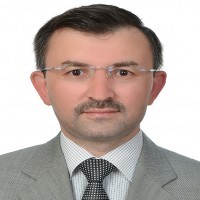
1981 yılında Samsun/Terme Muratlı Köyü’nde doğdu.
İlköğrenimini köyünde bitirdikten sonra (1992) bir yıl (1992-1993) Çarşamba İhsaniye Kur’an Kursu’nda okudu.
Ortaöğrenimini Çarşamba İmam-Hatip Lisesi’nde tamamladı. (1999)
2003 yılında Selçuk Üniversitesi İlahiyat Fakültesi’nden mezun oldu.
2008 yılında Selçuk Üniversitesi Sosyal Bilimler Enstitüsü Felsefe ve Din Bilimleri Anabilim Dalı Din Eğitimi Bilim Dalı’nda “Rahman Suresi’nin Din Eğitimi Açısından Değerlendirilmesi” adlı teziyle yüksek lisansı bitirdi.
2006-2009 yılları arasında DİB Trabzon Eğitim Merkezi’nde dinî yüksek ihtisas eğitimi aldı.
2021 yılında Ondokuz Mayıs Üniversitesi Lisansüstü Eğitim Enstitüsü Felsefe ve Din Bilimleri Anabilim Dalı Din Eğitimi Bilim Dalı’nda “Diyanet İşleri Başkanlığı Mesleğe Hazırlık ve Tashih-i Huruf Hizmet İçi Eğitim Kurslarının Etkililiğinin Değerlendirilmesi” adlı teziyle doktorasını tamamladı.
ÇALIŞMA HAYATI
2003-2005 yıllarında Millî Eğitim Bakanlığı’nda ücretli öğretmen olarak çalıştı.
2005 yılında Diyanet İşleri Başkanlığı’nda İmam-Hatip olarak göreve başladı.
2009 yılında DİB Şanlıurfa Eğitim Merkezi’ne "eğitim görevlisi" olarak atandı.
2011-2016 yılları arasında Almanya Berlin’de din görevlisi olarak çalıştı.
2016-2023 yılları arasında Diyanet Samsun Aşıkkutlu Eğitim Merkezi’nde eğitim görevlisi olarak çalıştı.
29 Mart 2023'ten itibaren Ordu Üniversitesi İlahiyat Fakültesi Din Eğitimi ABD öğretim üyesi olarak görev yapmaktadır.
İyi derecede Arapça, orta derecede Almanca ve başlangıç seviyesinde İngilizce bilen Ertürk, musiki ile de ilgilenmekte ve Ud çalmaktadır.
Yayımlanmış bazı çalışmaları bulunmaktadır. Evli ve üç çocuk babasıdır.
YAYINLARI
Kitapları:
* Türkiye’de Din Görevlilerinin Hizmet İçi Eğitimi, 1. Baskı, Üniversite Yayınları, Samsun 2021; 2. Baskı, İlahiyat Yayınları, Ankara, 2021; 3. Baskı, İlahiyat Yayınları, Ankara, 2024.
* Din Eğitimi Açısından Rahman Suresi, Üniversite Yayınları, Samsun 2021.
* "Eğitimin Amaç ve İşlevleri". (Kitap Bölümü). Eğitime Giriş, ed. M. Fatih Genç- E. Zehra Turan, Lisans Yayıncılık, İstanbul, 2024.
Makaleleri:
* (Hasan Dam’la Birlikte), “Diyanet İşleri Başkanlığı Tashih-İ Huruf Eğitim Programının İçerik ve Etkililiğinin Değerlendirilmesi”, Diyanet İlmî Dergi, Sayı: 55, 2019, ss. 467-494.
* (Hasan Dam’la Birlikte), “Diyanet İşleri Başkanlığı Mesleğe Hazırlık Eğitim Programının İçerik ve Etkililiğinin Değerlendirilmesi”, Ondokuz Mayıs Üniversitesi İlahiyat Fakültesi Dergisi, Sayı: 48, Haziran 2020, ss. 97-137.
* (Mustafa Kara ve Hasan Dam'la birlikte). “Hitabet Ve Mesleki Uygulama Derslerinin Öğrenci Gelişimine Katkı Düzeylerinin İncelenmesi (Ondokuz Mayıs Üniversitesi İlahiyat Fakültesi Örneği)”. Pamukkale Üniversitesi İlahiyat Fakültesi Dergisi 10/2 (December 2023), 738-767. https://doi.org/10.17859/pauifd.1365006.
* (Mustafa Kara ve Hasan Dam'la birlikte). “‘Hitabet Ve Mesleki Uygulama’ Dersleri Müfredatına İlişkin Öğrenci Görüşlerinin İncelenmesi (OMÜ İlahiyat Fakültesi Örneği”. Gümüşhane Üniversitesi İlahiyat Fakültesi Dergisi 13/25 (January 2024), 134-171. https://doi.org/10.53683/gifad.1357595.
* Ertürk, İdris. “Aday İmam-Hatip Ve Müezzin-Kayyımlara Göre Diyanet Akademisi Meslekî Eğitim Programının Değerlendirilmesi”. Dinbilimleri Akademik Araştırma Dergisi 24/2 (September 2024), 751-787. https://doi.org/10.33415/daad.1477156.
Diğer Çalışmaları:
* Benim Camim Benim Kitabım, Berlin 2014. (Kitap, Özel Basım)
* Hızlı Kur’an Öğrenim Kılavuzu, Berlin 2015. (Kitap, Özel Basım)
* Pratik Hutbe-Vaaz Kılavuzu, Samsun 2017. (Kitap, Özel Basım)
* Almanya’da Unutulmuş Bir Camimiz ve Şehitliğimiz: Wünsdorf, (Makale, 2017, www.academia.edu)
Kurum
Ordu Üniversitesi İlahiyat Fakültesi Felsefe ve Din Bilimleri Bölümü Din Eğitimi Anabilim Dalı







 Web
Web
 Web
Web
Assistant Editors
 Web
Web
Publishing Editor
Web
Turkish Language Editors
İslam felsefesi, Felsefe, Türk İslam Düşüncesi
English Language Editors
Arabic Language Editors

German and Japanese Language Editor

Language Editors (English, Arabic, German, Persian, Japanese)
Secretariat
Layout Editors
Managing Editor
Publication Board
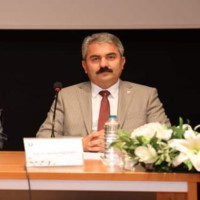
Assoc. Prof. Dr. Mehmet Şahin, who is originally from Adana, was born in 1975. He attended primary school in İmamoğlu. He graduated from Kozan Imam Hatip High School in 1994. He completed his undergraduate education at Ankara University Faculty of Theology, his master's degree at the same university with his thesis titled "Mustafa Fevzi b. Numan Life, Works and Poems Related to Religious Literature" in 2006, and his doctorate at Ankara Yıldırım Beyazıt University in 2016 with his thesis titled "Prose Yûsuf u Züleyha Stories in Old Turkish Literature and Muhammed b. İbrahim's Yûsuf u Züleyhâ'sı".
He worked as a manager at Ankara Sincan District Governorate Social Assistance and Solidarity Foundation between 2004-2005. He worked as an archive staff at the Library and Archive Services Directorate of the Grand National Assembly of Turkey between 2006-2016. During these years, within the scope of the Independence Courts Project, he worked in the project of inventorying, classifying, transferring to electronic media, indexing and transferring from Ottoman Turkish to today's alphabet. Within the scope of this project, his books titled İstiklal Courts, Istanbul İstiklal Court, Elcezire İstiklal Court, Isparta İstiklal Court, Eskişehir İstiklal Court, Şark İstiklal Court (5 volumes), Second Term Ankara İstiklal Court (3 volumes) were published. His book titled TBMM Albümü 1920-2010 (4 volumes), which he prepared with the committee during his service in the TBMM, was published by TBMM Press and Public Relations Directorate Publications in 2010. In 2015, he wrote the book Anthology of Turkish Poets of the Century (Transfer to Ottoman Turkish) with Emrah Gökçe.
Şahin started to work as a lecturer in the Department of Turkish-Islamic Literature at Akdeniz University Faculty of Theology in 2016 and is still working as the head of the Department of Islamic History and Arts. He coordinates the ongoing International Multidisciplinary Congresses of the Journal of Turkish Academic Research. He is also the founder and editor of the internationally indexed journals Turkish Academic Research Review and Tanım Tenkit ve Teori.
Şahin has publications such as Ankaralı Râzî and Divanı, Esâsî Divanı, Basîrî Divanı, Küçük Kara Balık (Translation into Ottoman Turkish with Moosa Rahimi), Language of Documents (Moosa Rahimi).
Şahin, who has also served as a commission member in various public institutions on issues related to his field of expertise, is married and has 3 children. He speaks English, Arabic, Persian and Ottoman Turkish.
CONTACT US
email
mehmetsahin@akdeniz.edu.tr
Other email
drmentesli@gmail.com
Cell Phone
+90 533 056 9174
Work Phone
+90 0242 310 6888 Extension: 3401
Office
Akdeniz University, Faculty of Theology
Mail Address
Akdeniz University Faculty of Theology Dumlupınar Bulvarı, 07058 Konyaaltı, Antalya-Turkey

Ankara Ü. İlahiyat fakültesinden 1992'de mezun oldum. Yüksek Lisansımı Selçuk Ü. Sosyal Bilimler Enstitüsünde 1996'da tamamladım. Aynı enstitüde 2004 yılında doktoramı bitirdim. 2015 Ekiminde doçent, 2022 yılında profesör oldum. Halen Necmettin Erbakan Ü. AK. İlahiyat Fakültesi Hadis Anabilim Dalı'nda Profesör Doktor unvanıyla Öğretim Üyesi olarak görevimi sürdürmekteyim.
Advisory Board
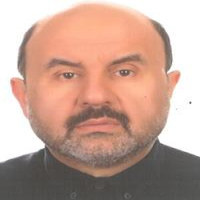


Doç. Dr. Rabiye Çetin, Ankara Üniversitesi İlahiyat Fakültesi, Temel İslam Bilimleri Bölümü, Kelam Anabilim Dalı
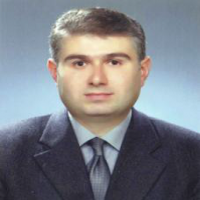
Doç. Dr. Ahmet Yemenici Ankara Üniversitesi İlahiyat Fakültesi’nden Mezun oldu. 2000 Yılında Ankara Üniversitesi Sosyal Bilimler Enstitüsü Felsefe ve Din Bilimleri (Din Eğitimi) alanında “Kur’an’daki Hz. İbrahim Kıssasının Din Öğretimi Özel Öğretim Yöntemleri Açısından Çözümlenmesi” adlı yüksek lisans tezini tamamladı. Ekim 2003 – Haziran 2004 Yılları arasında doktora projesi kapsamında, ücretsiz izinli ve Türkiye Diyanet Vakfı Burslusu olarak Frankfurt Johann Wolfgang Goethe Üniversitesi’nde doktora öğrencisi olarak bulundu. Doktora çalışması olarak 2012 yılında, Anakara Üniversitesi Sosyal Bilimler Enstitüsü Felsefe ve Din Bilimleri (Din Eğitimi) alanında “Din Kültürü ve Ahlak Bilgisi Öğretmenlerinin Diğer Dinlere ve Din Mensuplarına İlişkin Yaklaşımları” adlı çalışmayı tamamladı. 2013 Yılından itibaren Ankara Yıldırım Beyazıt Üniversitesi İslami İlimler Fakültesi Felsefe ve Din Bilimleri Bölümünde öğretim üyeliği görevini yürütmektedir. Akademisyen olmadan önce mesleki deneyim olarak 6 Yıl Milli Eğitim Bakanlığı ilk ve ortaöğretim kurumlarında öğretmenlik yapmıştır. 10 yıl Milli Eğitim Bakanlığı Din Öğretimi Genel Müdürlüğü Program Geliştirme Şubesinde görevli öğretmen ve 3 yıl eğitim uzmanı olarak görev almıştır. Bu yıllar içinde ilköğretim ve ortaöğretim Din Kültürü ve Ahlak Bilgisi Öğretim Programları ile İmam Hatip Lisesi Meslek Dersleri Öğretim Programlarının hazırlanması çalışmalarına ve program tanıtım seminerlerine katılmıştır. Doç. Dr. Ahmet Yemenici Ankara Yıldırım Beyazıt Üniversitesi İslami İlimler Fakültesi Felsefe ve Din Bilimleri Bölümünde din eğitiminde öğrenme alanları ve öğretim yaklaşımları, din öğretiminde temel beceriler, din eğitiminde program geliştirme ile dini farklılıklara ilişkin yaklaşımlar ve öğretmen deneyimleri üzerinde çalışmalarını yürütmektedir. Din eğitimi alanında yayınlanmış bildiri ve makaleleri bulunmaktadır. Aynı zamanda Fakülte Öğretim Programları ve Kalite Komisyonları üyesidir.

Editor-in-Chief
2023-: Ordu Univ. Faculty of Divinity, Department of History of Religions (Asst. Prof.)
2018-2022: Erciyes University ISS - History of Religions (Ph.D)
2016-2018: Erciyes University ISS - History of Religions (M.Sc.)
2011-2016: Erciyes University Faculty of Divinity (Grad)
Arabic B2 | English B2 | Japanese B2 | Korean A1
